The most common channel-killer is not bad editing or a quiet voice — it is picking a topic nobody is searching for, or one you cannot sustain for a hundred videos. Niche selection is a matching problem between what audiences want and what you can reliably deliver.
The Three-Circle Test
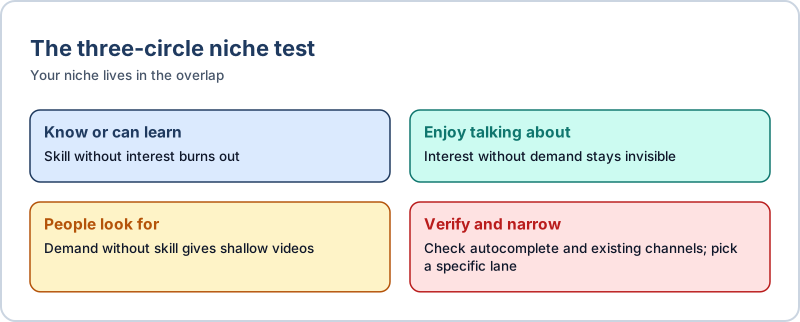
Sketch three overlapping circles: things you know or can learn deeply, things you genuinely enjoy talking about, and things people demonstrably look for. Your niche lives in the overlap. Skill without interest burns out. Interest without demand stays invisible. Demand without skill produces shallow videos an audience quickly sees through.
Verify Demand Before You Commit
Type your candidate topics into the YouTube search bar and study the autocomplete suggestions — these reflect what real viewers type. Then look at existing channels in the space. Competition is a good sign; it proves an audience exists. What you want to find is a demand signal plus an angle competitors are not covering: a different skill level, format, or perspective.
Narrow Enough to Own It
A new channel wins by being the obvious choice for a specific viewer, not a vague one. Fitness is an ocean; kettlebell training for desk workers is a lane you can lead. You can broaden later once you have an audience — narrowing later, after attracting the wrong viewers, is far harder.
Action Step
Complete the three-circle exercise on paper and shortlist three niche candidates. For each, list twenty video ideas in fifteen minutes. The niche where ideas flow fastest — and where search suggestions confirm demand — is your starting lane.
Educational content only. Platforms change their features and algorithms constantly — treat every tactic here as a starting point to test, not a guarantee. No audience-growth or income outcome is promised.