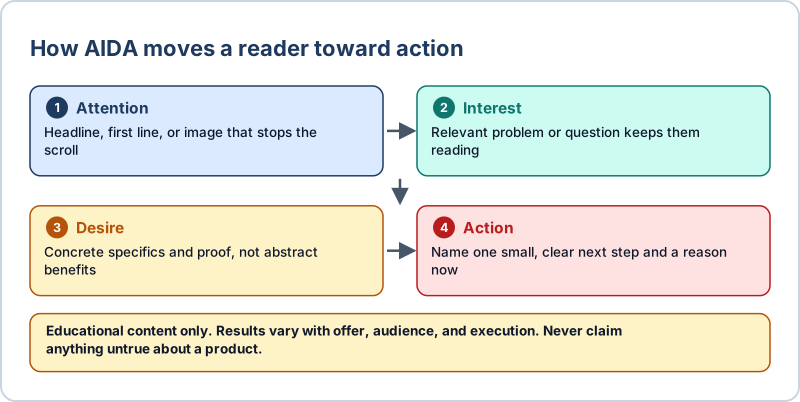
AIDA — attention, interest, desire, action — is the oldest framework in copywriting because it maps how a stranger becomes a buyer. Each stage is a doorway, and copy fails when it tries to skip one: you cannot create desire in someone whose attention you never earned.
Attention and Interest Do Different Jobs
Attention is the interruption: a headline, a first line, an image that stops the scroll. Interest is what keeps the stopped reader reading — a relevant problem, a surprising claim, a question about their own situation. Many writers win attention with a bold hook and then lose interest by pivoting to talking about themselves. The bridge from attention to interest is always the reader’s stake in what comes next.
Desire Is Built With Specifics
Desire grows when the reader can picture life after the purchase. Abstract benefits like save time do little; concrete scenes do the work — what Tuesday morning looks like when the report writes itself. Stack proof, sensory detail, and outcomes the reader already wants. You are not creating a new want; you are connecting your offer to one that exists.
Action Must Be Asked For
The action stage fails from politeness more than pushiness. Name the exact next step, make it small and clear, and give a reason to take it now. One piece of copy, one action — every added option divides response.
Action Step
Take a piece of your existing copy and label each sentence A, I, D, or action. Find the stage with the fewest sentences, then rewrite that section to give the neglected stage its full doorway.
Educational content only. Conversion results vary with offer, audience, and execution — test everything for yourself, and never use these frameworks to make claims about a product that are not true.