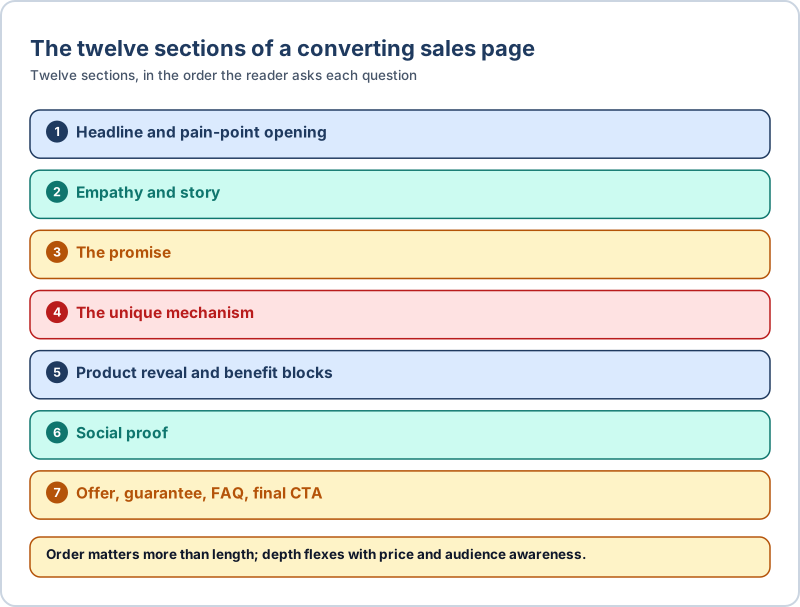
Most sales pages fail because they are assembled from random pieces rather than built on a deliberate structure. Before you write a single line of copy, you need a map of the whole page — what each section does and how it hands the reader to the next one.
The Twelve Sections in Order
A complete converting page moves through headline, pain-point opening, empathy and story, the promise, the unique mechanism, product reveal, benefit blocks, social proof, offer stack and pricing, guarantee or risk reversal, objection handling in an FAQ, and the final call to action. Each section answers one question the reader is silently asking, in roughly the order they ask it. Skip a section and an unanswered question becomes a closed browser tab.
Why Order Matters More Than Length
A short page in the right order beats a long page in the wrong order. The reader arrives skeptical, warms up through story and mechanism, and only then is ready to see price. Showing the offer before establishing the problem is like proposing marriage on a first date — the sequence itself creates the readiness.
Matching Depth to Price and Awareness
Lower-priced offers to warm audiences can compress several sections into a few lines. Higher-priced offers to cold traffic need every section fully developed, because the reader has more risk to resolve. The anatomy stays constant; only the depth of each section flexes.
Action Step
Find one sales page you admire in your niche and label every screen of it against the twelve sections. Note which sections are missing, compressed, or expanded, and write one sentence on why the writer likely made that choice.
Educational content only. Conversion results vary with offer, audience, and execution — test everything for yourself, and never use these frameworks to make claims about a product that are not true.