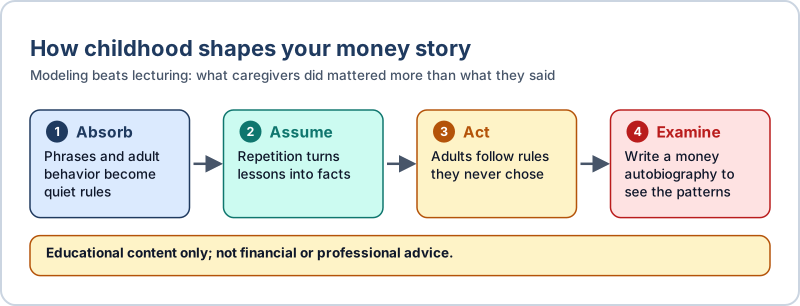
Most of your money behavior was installed before you were ten years old. You watched how the adults around you earned, spent, argued about, and avoided money, and your brain quietly filed those observations away as rules about how the world works. This lesson helps you surface those rules so you can finally examine them.
Money Messages You Absorbed Without Choosing
Think back to the phrases you heard growing up. Money does not grow on trees. We cannot afford that. Rich people are greedy. Each phrase was a lesson, and repetition turned lessons into assumptions. Children do not evaluate these messages critically; they absorb them as facts. As an adult you may still act on rules you never consciously agreed to, like avoiding negotiation or feeling anxiety when checking your bank balance.
Modeling Beats Lecturing
What your caregivers did mattered more than what they said. If bills triggered arguments, you may associate money with conflict. If spending was hidden or apologized for, you may treat purchases as something shameful. Behavioral modeling forms the emotional layer of your money story, which is why logic alone rarely changes financial habits.
Writing Your Money Autobiography
A money autobiography is a short written history of your relationship with money, from your earliest memory to today. Putting the story on paper converts vague feelings into specific, examinable events. Patterns that felt like personality traits often turn out to be learned responses, and learned responses can be unlearned.
Action Step
Set a timer for twenty minutes and write your money autobiography. Capture your earliest money memory, the phrases you heard most, and one moment money caused strong emotion. Keep it; you will use it throughout this course.
Educational content only — not financial, tax, investment, or legal advice, and no income outcome is promised or implied. Rules and thresholds change; verify current figures and consult a qualified professional before acting on your own situation.